
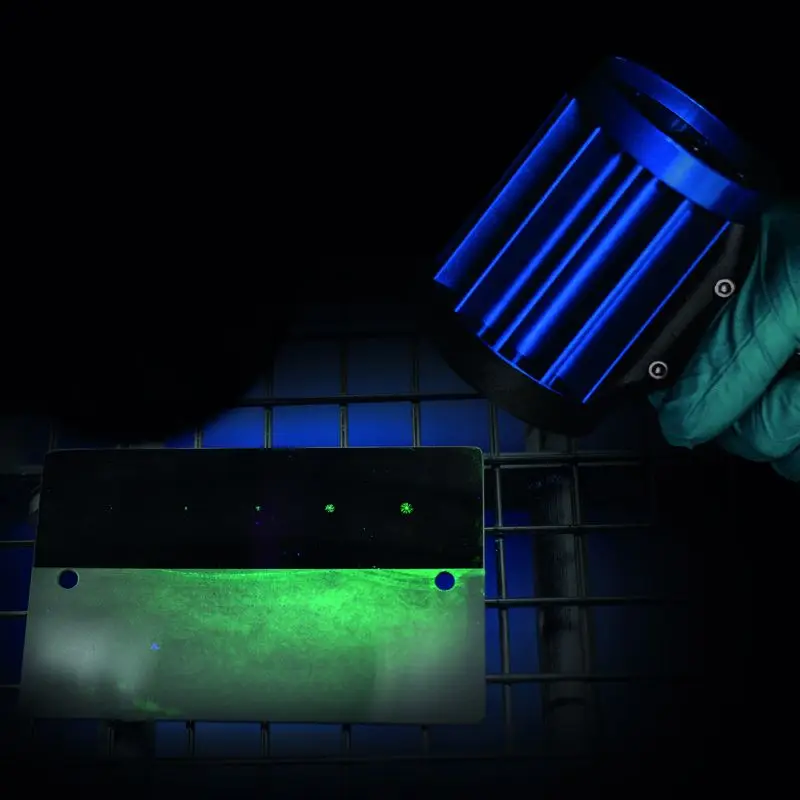
A new version of the TAM panel—the known-defect reference standard used to verify that fluorescent penetrant inspection systems are correctly detecting flaws before safety-critical parts are checked—has been developed to eliminate hexavalent chromium from its plating process. The move follows a policy from the US Department of War to reduce use of hexavalent chromium given its toxicity and health risks, which in turn drove demand for a replacement panel that meets tight quality tolerances without the environmental and occupational hazards of the older process.
The REL TAM Panel uses an alternative electroplated coating bonded to a food-grade 316 stainless steel substrate, which is then heat-treated and finished using diamond tooling and precision measurement techniques. Durability is confirmed through environmental testing and NIST-traceable measurement, intended to demonstrate that the panel's controlled defect indications hold up under industrial operating conditions rather than degrading or drifting over time.
The plating process is designed to meet RoHS, REACH, WEEE, ELV and Proposition 65 restrictions on hazardous substances. On the qualification side, the panel is approved to Pratt & Whitney TAM146040 in both polished/mirror and grit-blasted finishes, certified to GE Aerospace's P3TF47 specification, and approved to Rolls-Royce RRP58003. It also satisfies ASTM E1417, MIL-STD-6866, TO 33B-1-1, NAVAIR 01-1A-16-1 and TM 1-1500-335-23, covering the main standards referenced across NDT penetrant inspection programs.
Source: Aerospace Testing International — read the original article