
The European Space Agency has awarded the first contracts under its European Launcher Challenge, an initiative designed to broaden Europe's launch service base and reduce reliance on non-European providers. An ESA evaluation board reviewed each company's technical and financial proposals, and funding will be released in stages as milestones are met. Three contracts have been signed, with a fourth, for MaiaSpace, expected to follow in coming weeks. Each provider must achieve an orbital launch before 2028.
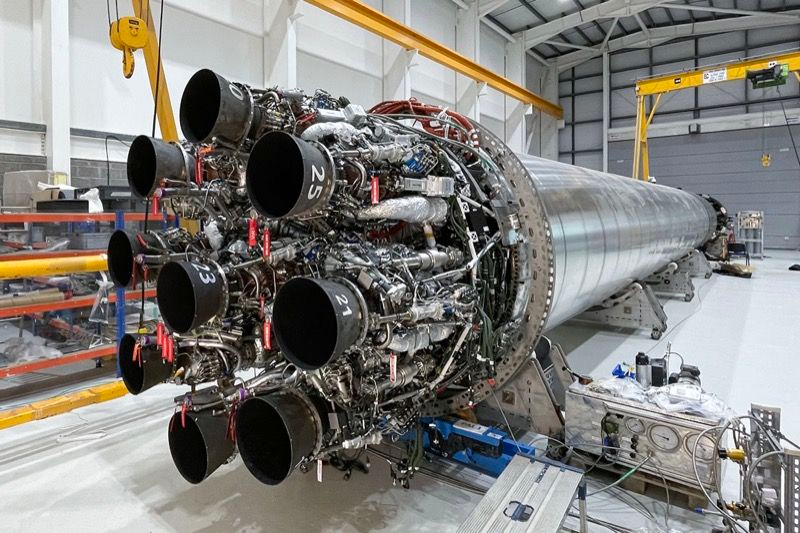
Germany's Rocket Factory Augsburg receives €186.9m, funded mainly by Germany with a UK contribution, to develop the three-stage RFA One, a 30m by 2.15m vehicle designed to carry up to 500kg to a 500km sun-synchronous orbit from SaxaVord in the UK. Spain's PLD Space has secured €158.9m, funded mainly by Spain with German support, to build on its 2023 Miura 1 demonstrator flight and develop Miura 5, targeting 540kg to sun-synchronous orbit from French Guiana, alongside plans for upgraded payload capacity.
Isar Aerospace's contract totals €197.8m, funded mainly by Germany with contributions from Austria and Norway. Its two-stage Spectrum vehicle, 28m tall with a 2m diameter and ten engines, flew for 30 seconds from Andøya Spaceport in Norway in 2025 and is rated for up to 1,000kg to low Earth orbit. A second Spectrum vehicle, intended to carry the company's first orbital payloads, is being prepared for launch from the same site.
Source: Aerospace Testing International — read the original article