
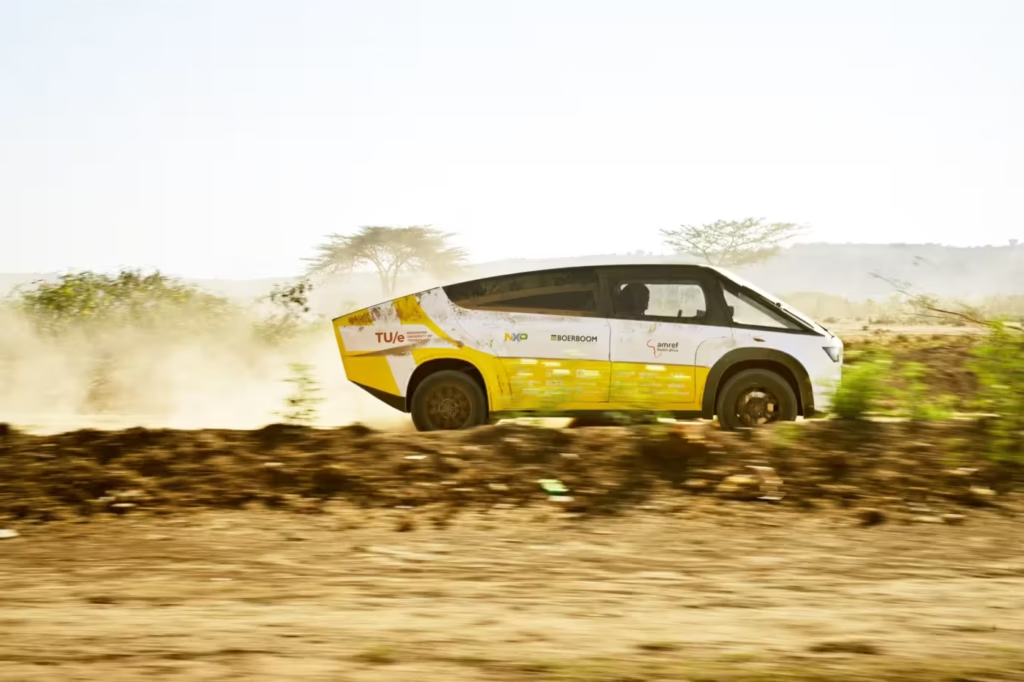
TU Eindhoven's Solar Team has completed a two-day field trial of Stella Juva, its solar-powered medical response vehicle, in Kenya's Narok region, covering more than 800 km on a mix of paved and unpaved roads. The only technical issue reported was a broken steering rod, repaired within half an hour. No independently verified figures on energy consumption or reliability during the trip have been released. One deployment leg to a remote site in Mosiro took six hours to complete.
Stella Juva, built by 23 TU Eindhoven students, is not a patient-transport ambulance but a mobile clinic designed for areas without stable grid power or fuel infrastructure. It carries an X-ray unit, ultrasound equipment, an AED, and vaccine cooling storage, all powered by roof-mounted solar panels supplemented by extendable side panels used while parked. The drivetrain and medical systems share the same solar supply.
Conducted with Amref Health Africa, the trial involved local healthcare workers testing the equipment under real conditions; the team estimates the vehicle could have served around 200 people during the two days. Solar generation reportedly exceeded consumption while the medical devices ran simultaneously, though this balance applies only to stationary operation, not the full 800 km driven — so the team's "energy-independent" claim cannot be fully verified from the data given. Earlier this month, the team cited a maximum range of 715 km on paved roads in sunny conditions, a separate figure from the Kenya distance covered.
Amref Health Africa says the concept could meaningfully improve access to care in Narok, noting that a single deployment could provide ultrasound scans for 30 to 40 pregnant women. Stella Juva remains a student project with no confirmed path to series production; the team is now looking for industry, NGO, and government partners to advance development.
Source: electrive.com — read the original article