
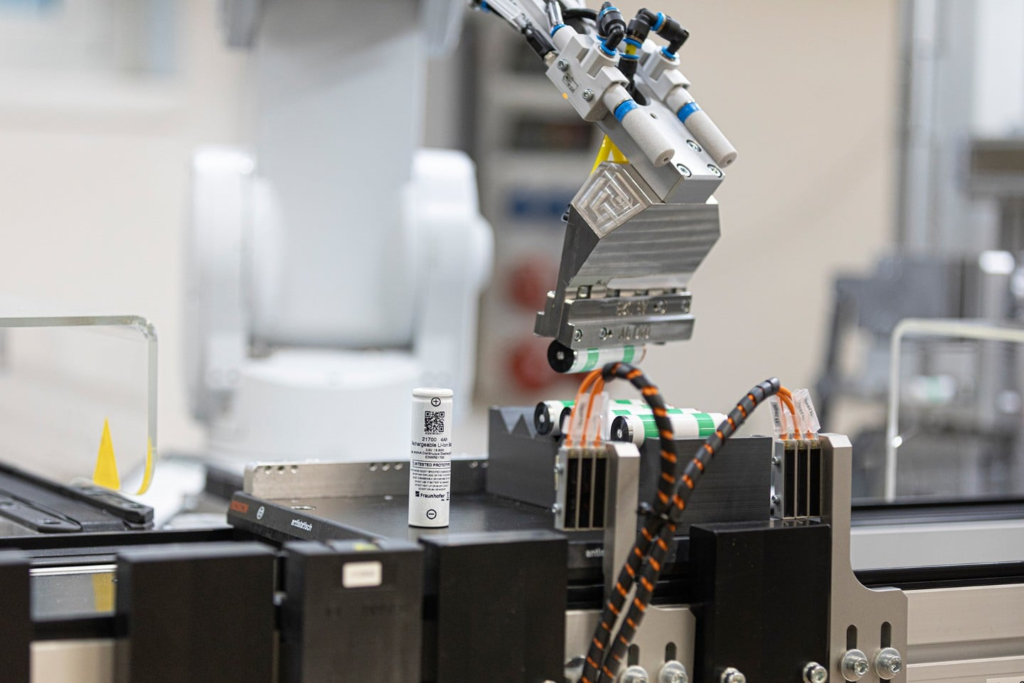
Fraunhofer IPA and the University of Stuttgart's Institute for Photovoltaics have patented a new cell and electrode design that makes aluminium viable as a lithium-ion anode material. Aluminium has long been attractive for its low cost, availability, and high capacity, but repeated volume expansion during cycling causes cracking, pore formation, and eventual pulverisation of the electrode, driving capacity fade. The new approach is said to stabilise the material through these cycles and preserve electrical contact within the electrode over extended use, removing graphite and silicon from the anode entirely.
Structurally, the design uses a commercially available alloyed aluminium foil that acts simultaneously as active material and current collector, eliminating both the copper foil and the separate coating step used in conventional anode production. Fraunhofer expects this to cut process costs and energy use in electrode manufacturing. Lithium manganese oxide is proposed as a matching cathode, offering competitive energy density in a phosphate-free chemistry that could undercut LFP on cost. Paired with high-flash-point electrolytes and a fluorine-free LMO cathode, the researchers say a fully PFAS-free cell is achievable, also removing the hydrogen fluoride risk associated with battery fires.
Fraunhofer sees early applications in air freight, container tracking systems, and medical devices, where safety, robustness, and compact packaging matter most. Prototypes are currently under test at the Centre for Digitalised Battery Cell Production, and the institute notes the chemistry could run on existing manufacturing lines without a factory rebuild. No cycle life or gravimetric/volumetric energy density figures have been disclosed yet.
Source: electrive.com — read the original article