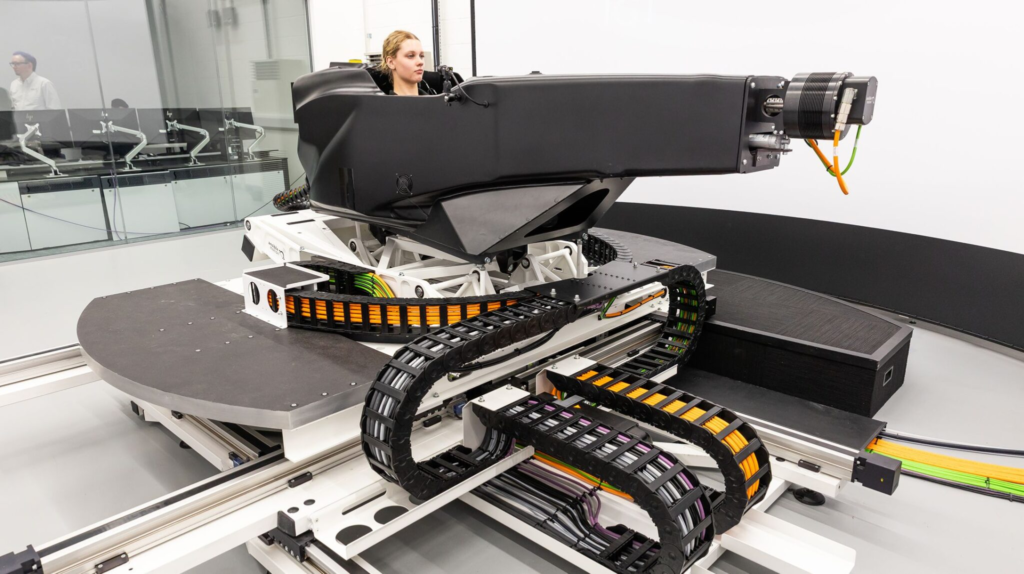
IAAPS, based at Bristol and Bath Science Park, has linked an Ansible Motion Delta S2 driver-in-the-loop simulator to its 1,800kW four-wheel-drive powertrain test facility, creating a real-time environment that combines virtual vehicle dynamics with physical propulsion hardware and human driver input. The aim is to let engineers start complex development and validation work earlier in a program, cutting technical risk, prototype build requirements and overall development time.
The Delta S2 itself uses a six-degree-of-freedom motion base, projection-based visuals and a swappable cockpit. For motorsport users, the setup supports vehicle setup optimization, calibration, strategy work and scenario testing, as well as driver-side activities such as track familiarization and race-procedure practice. IAAPS says this allows teams to work through more options before reaching the circuit, reducing track time, tire use and mileage while improving driver-engineer communication. The system has already been used in race preparation with F1 Academy driver Rachel Robertson, and IAAPS is now opening the capability to further motorsport, automotive and transportation customers.
For automotive and propulsion developers, the combined rig allows driver behavior, propulsion response and broader vehicle functions to be assessed before a full physical prototype exists, across ICE, hybrid and battery-electric programs. IAAPS positions this within its wider engineering offering, which includes real-time simulation, X-in-the-loop methods, physical testing, control systems and data analysis.
Managing director Professor Rob Oliver said the platform gives customers a flexible route to validate complex systems earlier and more efficiently, using IAAPS's facilities and engineering support rather than requiring organizations to build and operate their own simulator infrastructure.
Source: Automotive Testing Technology International — read the original article